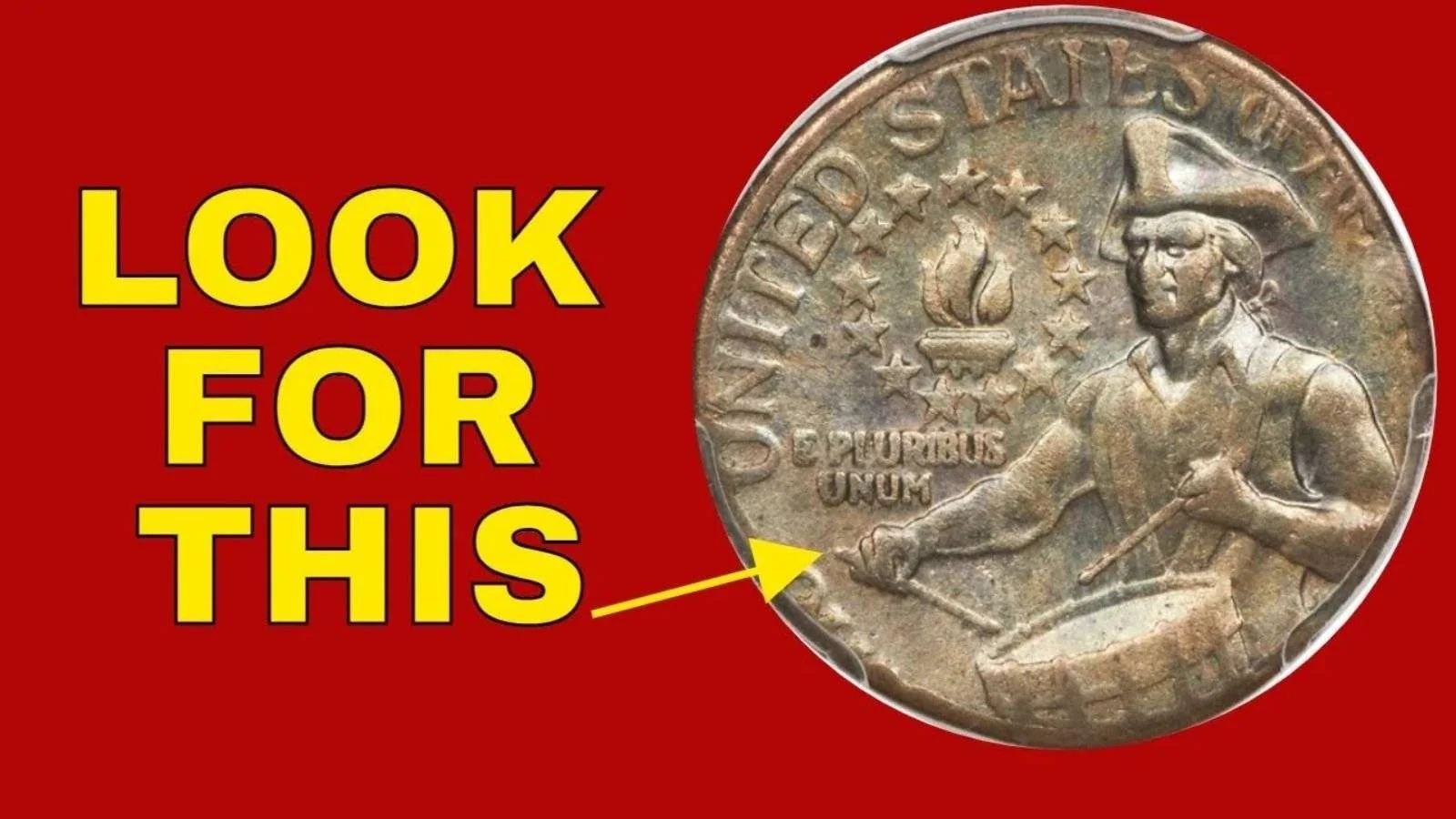

In the world of numismatics, certain coins transcend mere monetary value and transform into storied artifacts of American history. Among these iconic pieces stands the Rare Bicentennial Quarter—a commemorative coin minted in 1975 and 1976 to mark the 200th anniversary of U.S. independence. While most of these quarters are worth little more than their face value, a few rare variants have captured the attention of collectors and historians alike. In one exceptional case, a single Rare Bicentennial Quarter reportedly fetched a staggering $11 million. Could such a coin be hiding in your pocket or loose change?
The Lincoln Wheat Penny Valued at $1.5 Million, Still in Circulation
Historical Context and Symbolism
The issuance of the Rare Bicentennial Quarter stemmed from a nationwide celebration of the United States’ bicentennial in 1976. The design includes the dual date “1776–1976” beneath George Washington’s profile on the obverse, signifying its special status. On the reverse, a colonial drummer boy stands in front of a torch encircled by thirteen stars—an image crafted by artist Jack L. Ahr. This replaced the traditional eagle motif and served to evoke patriotic pride and historical reflection. Though over 1.6 billion of these quarters were minted for everyday use, only a handful of rare variants have since emerged as immensely valuable collectibles.
Composition and Distinctive Variants
-
Standard Issues: The majority of Bicentennial Quarters were struck using copper-nickel clad planchets, intended for circulation.
-
Silver-Clad Versions: A small number were produced in 40% silver, reserved for uncirculated sets and proof collections—rendering them more collectible, though generally not extremely valuable.
-
Rare Error or Prototype Coins: A few Rare Bicentennial Quarter specimens bear significant anomalies, such as incorrect metal composition (e.g., nearly pure silver), off-center strikes, or double-die errors. One such coin, issued inadvertently on a 95% silver planchet, is believed to be the one valued at $11 million. These anomalies—often linked to test strikes or internal mint samples—make certain quarters true numismatic treasures.
Why a Rare Bicentennial Quarter Could Be Worth $11 Million
This extraordinary valuation is the result of a striking combination of factors:

-
Unique Silver Composition: Unlike typical clad coins, this piece is thought to have been struck from near-pure silver.
-
Minting Error or Prototype Status: A highly unusual production flaw or test coin enhances its rarity.
-
Flawless Condition: Graded at MS‑70 or PR‑70, indicating a perfect, unblemished finish.
-
High-Profile Demand: Elite collectors and auction houses drive prices upward—one such coin reportedly sold for $11 million.
It’s crucial to understand that such figures reflect what someone is willing to pay—not intrinsic metal value alone.
Could a Rare Bicentennial Quarter Still Be Found?
Yes—many of these quarters remain in circulation, stashed in piggy banks, drawers, or jars. While the vast majority are common clad coins, the chance that an overlooked Rare Bicentennial Quarter slipped into everyday use still excites collectors and hobbyists. The idea that a rare, high-value coin could be mixed in with ordinary pocket change makes the hunt all the more thrilling.
How to Recognize a Rare Bicentennial Quarter
If you want to identify one of these elusive coins, pay attention to these details:
-
Date: Confirm it displays “1776–1976” (not just “1976”).
-
Reverse Motif: Look for the colonial drummer boy, not an eagle.
-
Mint Mark: Check for “P” (Philadelphia), “D” (Denver), or “S” (San Francisco). The S mint mark often indicates proof coins.
-
Metal Composition: Silver-pure versions lack the visible copper stripe at the edge and weigh slightly more than copper-nickel.
-
Errors or Die Variations: Observe visually for doubling, misaligned lettering, or off-center prints.
-
Condition: The sharper and cleaner the features, the better its collectible value.
What to Do If You Find One
Discovering a potential Rare Bicentennial Quarter requires careful handling:
-
Never clean or polish the coin, as even gentle cleaning can reduce its value.
-
Store it in a soft, inert holder like an acid-free sleeve to protect the surface.

-
Seek professional grading and authentication, ideally through trusted services such as:
-
PCGS (Professional Coin Grading Service)
-
NGC (Numismatic Guaranty Corporation)
-
These services can verify the coin’s authenticity, assign a grade, and provide documentation—essential if you plan to sell it or insure it.
Frequently Asked Questions (FAQs)
-
Are all Bicentennial Quarters valuable?
Most Bicentennial Quarters are worth only 25 cents to a few dollars. Only rare types—silver, error, or prototype issues—are highly valuable. -
Can I still find one in circulation?
Yes. Though rare, a few exceptional quarters could still remain unnoticed in loose change. -
How can I tell a quarter is silver?
Silver-pure coins typically lack a copper edge stripe, feel slightly heavier, and appear duller in color—especially around the edge. -
What should I do if I suspect I have a rare one?
Do not handle excessively or clean it. Store it securely and have it evaluated by a certified grading service.
-
Why was a drummer boy chosen for the reverse design?
The U.S. Mint held a national competition for the Bicentennial design, and Jack L. Ahr’s drummer boy image was selected for its symbolic representation of Revolutionary War-era America.
Final Thoughts: A Modern-Day Treasure Hunt
The story of the Rare Bicentennial Quarter is compelling not just for collectors, but for anyone intrigued by the idea that history—and extraordinary value—can hide in everyday objects. It’s a reminder that something as ordinary as loose change can contain a piece of American heritage worth millions.
So, the next time you find yourself handling quarters, especially those dated “1776–1976”, take a closer look. That simple piece of pocket change could conceal a legendary coin. With curiosity, knowledge, and a bit of luck, you might be holding a Rare Bicentennial Quarter—one of the most coveted treasures that still moves through circulation unseen.
Keep a watchful eye and let your change tell a story.
Some Important Link
| Download News APP | Click Here |
| WhatsApp Group | Click Here |
| Home Page | Click Here |